Equipment
We enhance the accuracy and reliability of nonclinical studies through state-of-the-art research equipment and advanced analytical systems.
-
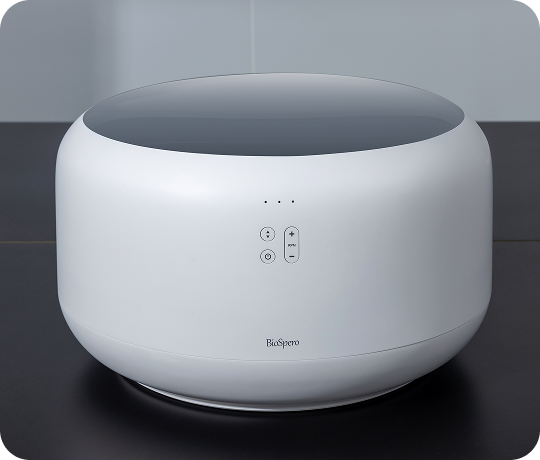
Biospero OrganXpert® Microphysiological System (MPS) Platform
The OrganXpert® platform is an organ-on-a-chip–based microphysiological system developed by Biospero, designed to mimic human physiological microenvironments for advanced in vitro modeling.
Key Features
Pump-free microfluidic circulation enabling physiologically relevant flow conditions
High-throughput screening capability for efficient compound evaluation
Open 3D co-culture system supporting multi-cellular interactions
All-in-one automated control system for integrated operation and monitoring
-
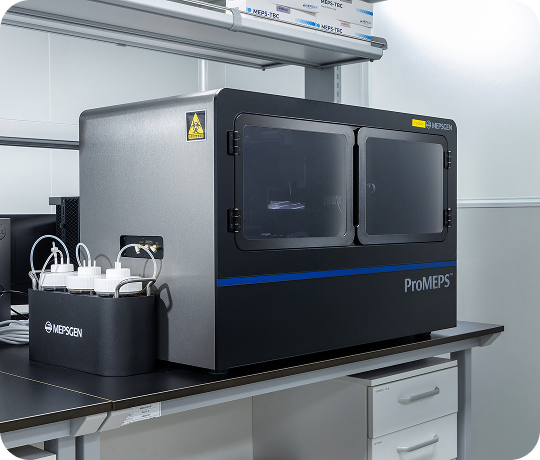
MepsGen ProMEPS™ Automated Microphysiological System
ProMEPS™ is an all-in-one robotic microphysiological system developed by MepsGen for automated operation of organ-on-a-chip platforms.
Key Features
Fully automated workflow for reproducible experimental processes
32-channel parallel processing for high-throughput applications
Precise microenvironmental control (e.g., flow, temperature, media conditions)
User-friendly interface for streamlined operation
-
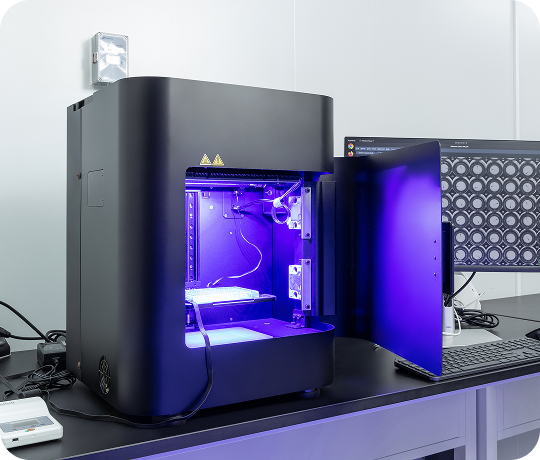
MCAM(Multi-Camera Array Microscopy)
MCAM is an advanced imaging system equipped with multiple high-resolution cameras, enabling detailed behavioral and morphological tracking and analysis, particularly in zebrafish.
Key Features
Supports behavioral observation, embryonic development analysis, and neurostimulation response evaluation in zebrafish; applicable to toxicity and efficacy evaluation of chemicals, pesticides, food, and pharmaceuticals
Enables image tracking and analysis of small organisms such as Drosophila and C. elegans
-
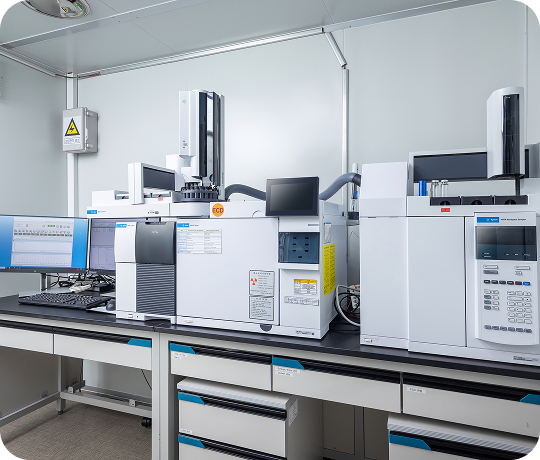
Gas Chromatography–Mass Spectrometry (GC-MS)
Gas Chromatography–Mass Spectrometry (GC-MS) is an analytical instrument that vaporizes a sample by heating, separates its components as they pass through a chromatographic column carried by an inert gas, and subsequently ionizes the separated compounds to generate mass spectra for both qualitative and quantitative analysis.
Key Features
Applicable to concentration analysis in toxicity studies; suitable for chemicals, pesticides, food, and pharmaceutical compounds
-
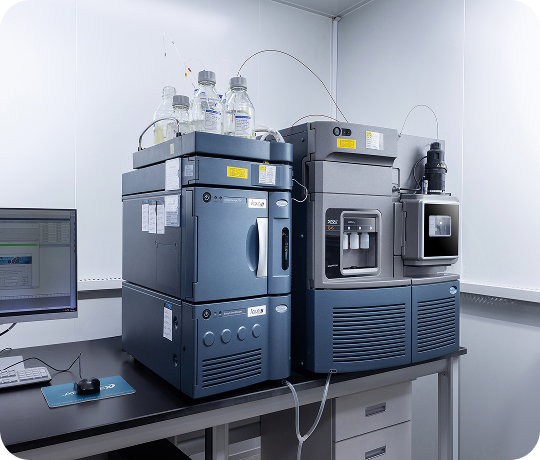
ACQUITY I-Class UPLC / Xevo TQ-XS Triple Quadrupole (LC-MS/MS)
This system integrates ultra-performance liquid chromatography (UPLC) with triple quadrupole mass spectrometry (MS/MS) for high-sensitivity and high-specificity analysis.
Key Features
Excellent selectivity and specificity: Selective detection using MRM (Multiple Reaction Monitoring); clear discrimination of structurally similar compounds and isomers
High sensitivity: Detection at pg/mL to fg/mL levels; suitable for trace-level analysis with minimal sample volume; low LOD and LOQ
High analytical efficiency: Rapid analysis enabling high-throughput sample processing
Wide applicability: Applicable to compounds ranging from polar to non-polar; suitable for small molecules to peptides and proteins
-
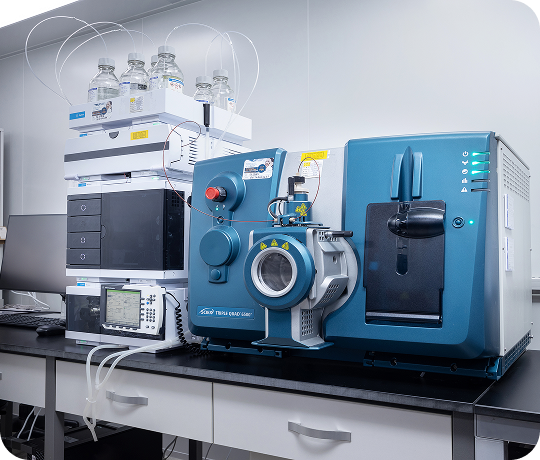
Agilent 1290 infinityⅡ/Triple Quad 6500+ system
This system integrates ultra-performance liquid chromatography (UPLC) with triple quadrupole mass spectrometry (MS/MS) for high-sensitivity and high-specificity analysis.
Key Features
Excellent selectivity and specificity: Selective detection using MRM (Multiple Reaction Monitoring); clear discrimination of structurally similar compounds and isomers
High sensitivity: Detection at pg/mL to fg/mL levels; suitable for trace-level analysis with minimal sample volume; low LOD and LOQ
High analytical efficiency: Rapid analysis enabling high-throughput sample processing
Wide applicability: Applicable to compounds ranging from polar to non-polar; suitable for small molecules to peptides and proteins
-
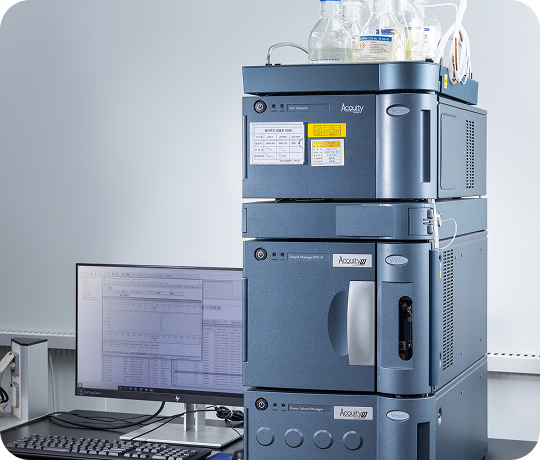
ACQUITY UPLC H-Class PLUS
HPLC is an analysis system for separating, identifying, and quantifying compounds in a liquid sample.
Key Features
High resolution and sensitivity: Ultra-fine packing materials deliver exceptional separation efficiency and enable precise detection of compounds even at low concentrations
Analysis of non-volatile and high-molecular-weight substances: Capable of analyzing non-volatile samples, high-molecular-weight compounds, and thermally labile substances
High efficiency through quantitative capability and automation: Enables accurate quantitative analysis using precision pump technology, along with high-throughput sample processing via an automated sampler
Wide applicability: Allows analysis of a broad range of compounds, from non-polar to polar substances, through the use of various column selections
-
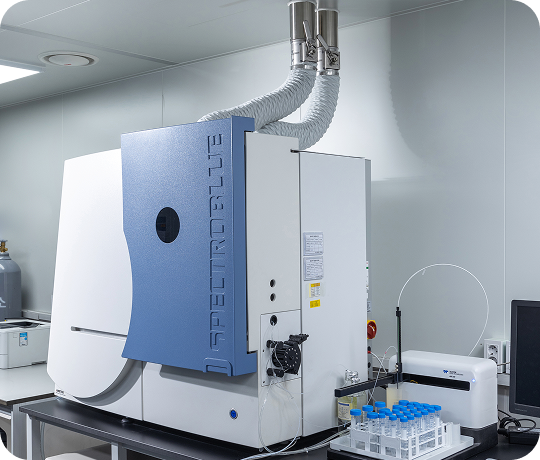
SPECTRO BLUE FMT 36
ICP-OES is an analytical system that enables qualitative and quantitative analysis by measuring the wavelengths and intensities emitted from elements in a sample when excited by inductively coupled plasma (ICP).
Key Features
Simultaneous multi-element analysis: By measuring the characteristic wavelengths of elements, multiple elements can be analyzed simultaneously and rapidly
High sensitivity and accuracy: Capable of analysis across concentration ranges from ppm to % levels, providing excellent accuracy and precision even for trace metal analysis
Excellent matrix tolerance: Due to the high plasma temperature, chemical interferences are minimized when analyzing complex samples, enabling analysis of multiple elements in diverse matrices
-
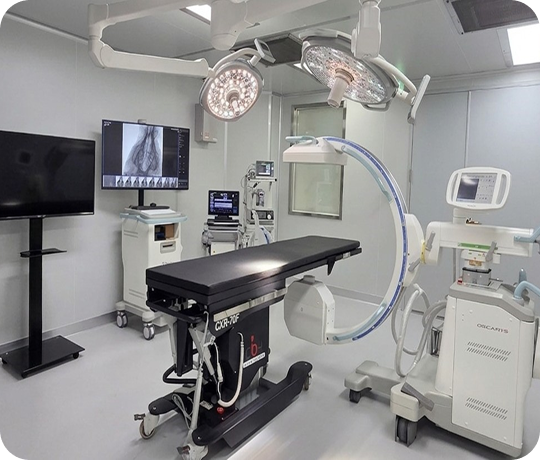
C-arm
A C-arm is a mobile real-time fluoroscopic X-ray imaging system that is widely used in operating rooms and diagnostic settings.
The name "C-arm" is derived from the C-shaped arm structure of the device.
This structure allows the X-ray source and detector to be freely positioned around the patient, enabling image acquisition from various angles.Key Features
Real-time imaging: Provides dynamic fluoroscopic images, rather than static images, allowing accurate visualization of the lesion site in real time
Mobility: Easily movable to required locations such as operating rooms and emergency departments
Low dose / high image quality: Modern systems provide high-resolution images while minimizing radiation exposure
-
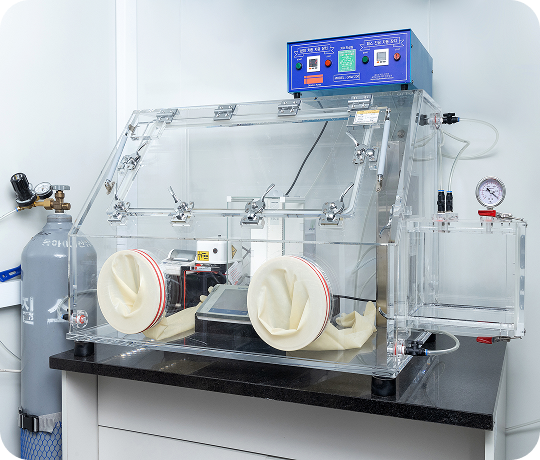
Gas-Purged Vacuum Glove Box
A gas-purged vacuum glove box is a system designed to replace the internal atmosphere of a sealed chamber with inert gas, thereby removing oxygen and moisture, and enabling operators to perform required tasks inside the chamber through integrated gloves (e.g., latex gloves).
Key Features
Maintenance of a controlled inert atmosphere: The internal chamber is purged with N₂ or Ar gas to maintain a clean and controlled environment
Prevention of contamination for sensitive materials: Prevents contamination when handling materials that are sensitive to moisture, O₂, and CO₂
Safe handling of hazardous substances: Provides a safe working environment when handling highly toxic or reactive materials
-
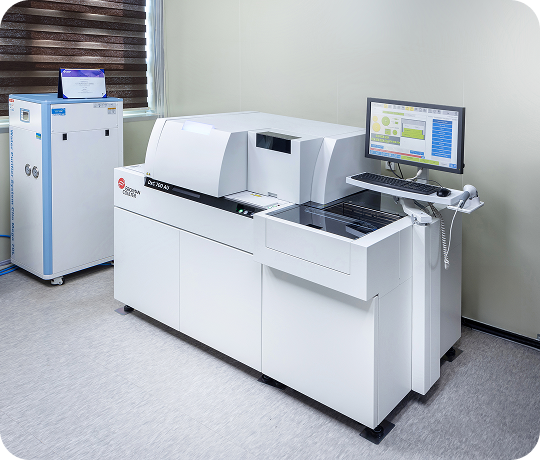
DxC 700 AU Clinical Chemistry Analyzer
The DxC 700 AU is a latest-generation clinical chemistry analyzer that combines the proven reliability of the AU series with the intuitive interface of the DxC series.
Key Features
High-throughput processing: Capable of performing up to 800 photometric tests per hour, and up to 1,200 tests per hour when including electrolyte (ISE) analysis
Accuracy and reliability: Generates precise results from small sample volumes using spectrophotometry and potentiometry; automatically detects sample conditions that are difficult to identify visually, such as hemolysis, icterus, and lipemia
-
ATLAS SUNTEST® CPS+ Xenon Test Chamber
The SUNTEST® CPS+ is a light exposure testing system that uses a xenon arc lamp as a light source, providing a spectral distribution similar to natural sunlight.
Key Features
Xenon arc lamp-based light source: Provides a continuous spectrum similar to natural sunlight
Irradiance control:
Enables control of light exposure levels according to defined test conditionsTemperature control function:
Helps maintain stable test conditions during light exposureUniform irradiation environment:
Ensures uniform light exposure conditions across test samplesReproducible test conditions:
Facilitates consistent and reproducible exposure conditions for repeated testing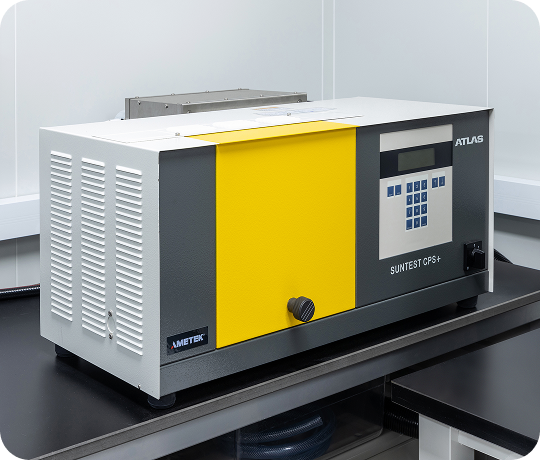
-
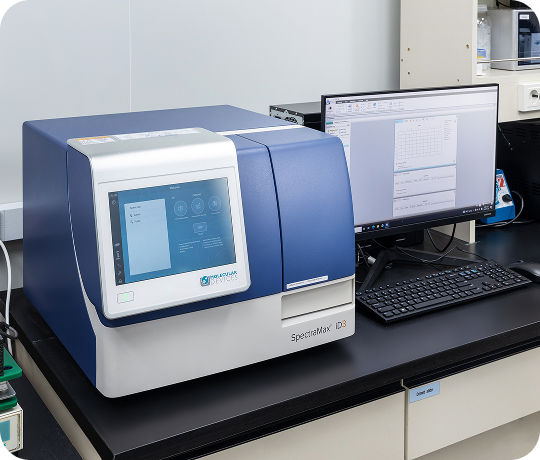
SpectraMax® iD3 Multi-Mode Microplate Reader
The SpectraMax® iD3 is a multi-mode microplate reader that supports various detection modes, including absorbance, fluorescence, and luminescence. Based on its high sensitivity and stable signal detection performance, it is widely used for acquiring quantitative data in biochemical and cell-based assays.
Key Features
Multi-mode detection system:
Supports measurement of absorbance, fluorescence, and luminescenceHigh sensitivity and precision:
Enables reliable data acquisition even at low signal intensitiesCompatibility with various microplates:
Supports analysis of 96-well and 384-well platesSupport for kinetic and endpoint analysis:
Enables analysis of time-dependent reactions (kinetic) as well as final endpoint measurementsIntegrated software-based data management:
Provides functions for experiment setup, data acquisition, analysis, and result storage